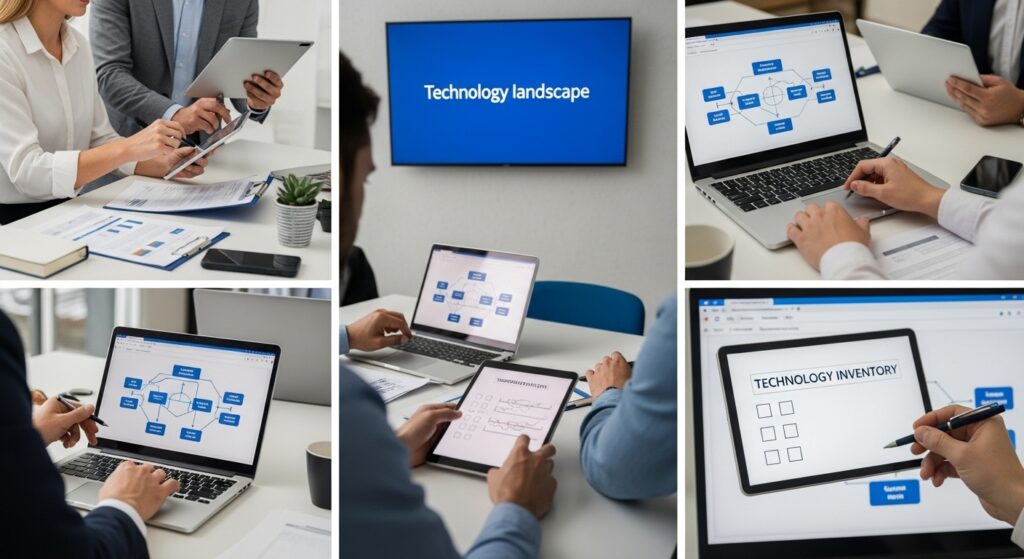
A small Miami accounting firm can struggle when legal updates, technology risks, and client demands hit all at once. In today’s environment, even minor lapses in governance or compliance can threaten growth and credibility. Defining a strong GRC strategy puts independent CPAs in control, transforming fragmented efforts into a unified, adaptive approach. Adopting a comprehensive organizational integration ensures your firm strengthens decision-making, protects client interests, and builds a reputation for reliability in a competitive market.
Table of Contents
- Defining GRC Strategy For Accounting Firms
- Types Of GRC Frameworks And Core Elements
- How GRC Technology Drives Client Growth
- Legal And Regulatory Requirements In Florida
- Risks And Common Mistakes In GRC Adoption
- Comparing GRC Platforms And Implementation Options
Key Takeaways
| Point | Details |
|---|---|
| GRC Framework Importance | A robust Governance, Risk Management, and Compliance (GRC) framework is essential for accounting firms to align governance practices, manage risks, and comply with regulations effectively. |
| Dynamic Systems Necessity | Accounting firms must develop flexible GRC systems that adapt to changing regulatory environments and technological advancements. |
| Technology as a Growth Engine | Investing in advanced GRC technology enables accounting firms to shift from reactive compliance to proactive management and client growth. |
| Continuous Training and Monitoring | Regular training and quarterly GRC strategy audits are crucial for ensuring that firms maintain compliance and effective risk management practices. |
Defining GRC Strategy for Accounting Firms
Governance, Risk Management, and Compliance (GRC) represents a strategic framework critical for modern accounting firms seeking sustainable growth and client trust. Comprehensive organizational integration ensures that accounting practices align governance principles, manage potential risks, and maintain stringent regulatory compliance.
At its core, GRC transforms traditional siloed approaches into a unified system where governance establishes decision-making protocols, risk management identifies potential uncertainties, and compliance monitors adherence to professional standards. Miami accounting firms implementing robust GRC strategies can protect client interests, enhance operational transparency, and build a reputation for reliability. The goal is creating an organizational ecosystem where strategic objectives, risk awareness, and regulatory requirements seamlessly interconnect.
Successful GRC implementation requires accounting firms to develop comprehensive frameworks that go beyond checkbox compliance. This means developing dynamic systems that can adapt to evolving regulatory landscapes, technological disruptions, and industry-specific challenges. Firms must invest in continuous training, implement sophisticated monitoring technologies, and cultivate a proactive organizational culture that prioritizes strategic risk awareness.
Pro tip: Conduct quarterly GRC strategy reviews to ensure your accounting firm remains agile and responsive to emerging regulatory and technological shifts.
Types of GRC Frameworks and Core Elements
Accounting firms utilize multiple GRC frameworks designed to systematically integrate governance, risk management, and compliance processes. Comprehensive organizational frameworks emphasize strategic alignment, continuous monitoring, and clear responsibility assignment across organizational structures.
Key GRC frameworks like the NIST Cybersecurity Framework provide structured approaches for managing organizational risks. These frameworks typically include five critical functions: Identify, Protect, Detect, Respond, and Recover. For Miami accounting firms, this means developing sophisticated systems that can proactively assess potential technological and regulatory risks while maintaining robust compliance mechanisms.
The core elements of effective GRC frameworks transcend generic compliance checklists. Successful implementations require dynamic strategies that adapt to evolving regulatory landscapes, technological disruptions, and industry-specific challenges. Miami CPAs must focus on creating flexible frameworks that integrate continuous risk assessment, transparent governance protocols, and comprehensive compliance strategies that protect client interests and organizational reputation.
Pro tip: Develop a cross-functional GRC implementation team that includes representatives from legal, technology, and operational departments to ensure holistic risk management.
How GRC Technology Drives Client Growth
GRC technology has become a transformative force for Miami accounting firms seeking to expand their client base and demonstrate unparalleled professional capabilities. Proactive risk management technologies enable firms to transition from reactive compliance models to strategic business growth platforms that inspire client confidence.
Modern GRC technologies integrate sophisticated tools that automate compliance tracking, risk assessment, and governance protocols. By leveraging advanced cybersecurity and data analytics capabilities, accounting firms can provide clients with transparent, real-time insights into their financial risk management strategies. This technological approach not only mitigates potential vulnerabilities but also positions accounting firms as innovative, forward-thinking partners who prioritize client security and operational excellence.

The most successful accounting practices recognize that GRC technology is more than a compliance requirement—it’s a strategic growth engine. These technologies enable firms to identify emerging market opportunities, predict potential risks, and develop customized solutions that address unique client challenges. By demonstrating a comprehensive approach to governance, risk management, and compliance, Miami CPAs can differentiate themselves in a competitive market and attract high-value clients seeking sophisticated financial management partners.
Pro tip: Invest in GRC technologies that offer seamless integration, real-time reporting, and customizable risk assessment dashboards to showcase your firm’s technological sophistication.
Legal and Regulatory Requirements in Florida
Miami CPAs must navigate a complex landscape of legal and regulatory requirements that govern professional accounting practices in Florida. Strict professional licensing standards established by the Florida Board of Accountancy create a rigorous framework for maintaining ethical and professional conduct across accounting firms.
The regulatory environment for Florida CPAs encompasses multiple layers of compliance, including state statutes, administrative codes, and professional ethical standards. Accountants must adhere to Chapters 455 and 473 of Florida Statutes, which outline detailed requirements for professional practice, including mandatory continuing professional education, ethical conduct, and strict guidelines for maintaining professional licensure. These regulations are designed to protect public interests by ensuring that accounting professionals maintain the highest standards of competence and integrity.
Licensure in Florida requires extensive professional preparation and ongoing commitment to excellence. Candidates must complete 150 semester hours of education, including specific upper-level accounting and business law coursework, pass the comprehensive Uniform CPA Exam, and obtain verified work experience. Beyond initial licensure, CPAs must continuously demonstrate their commitment to professional development through biennial ethics continuing professional education requirements and staying current with evolving regulatory landscapes.
Summary of essential Florida CPA regulatory requirements:
| Requirement | Description | Renewal Frequency |
|---|---|---|
| Education | 150 semester hours, including accounting | One-time prior to licensure |
| Uniform CPA Exam | Comprehensive national exam | One-time |
| Verified Work Experience | Supervised professional experience | One-time |
| Ethics Continuing Education | Ongoing ethics training | Every two years |
Pro tip: Develop a systematic compliance tracking system that automatically monitors your firm’s regulatory requirements and upcoming continuing education deadlines.
Risks and Common Mistakes in GRC Adoption
Miami accounting firms frequently encounter significant challenges when implementing Governance, Risk, and Compliance (GRC) strategies. Critical GRC adoption challenges stem from organizational complexity, departmental silos, and insufficient understanding of comprehensive risk management approaches.
One of the most prevalent mistakes in GRC implementation is treating compliance as a standalone checklist rather than an integrated organizational strategy. Accounting firms often underestimate the complexity of aligning technological solutions with existing business processes, leading to fragmented risk management approaches. This narrow perspective can result in missed vulnerabilities, ineffective communication between departments, and potential regulatory exposures that could compromise client trust and firm reputation.
Successful GRC adoption requires a holistic approach that transcends traditional compliance frameworks. Miami CPAs must develop sophisticated strategies that combine technological solutions, continuous staff training, and dynamic risk assessment protocols. This means creating adaptable systems that can respond quickly to evolving regulatory landscapes, technological disruptions, and industry-specific challenges while maintaining transparency and operational efficiency.
Pro tip: Conduct comprehensive GRC strategy audits quarterly to identify potential implementation gaps and ensure your firm’s risk management approach remains proactive and integrated.
Comparing GRC Platforms and Implementation Options
Miami accounting firms have multiple GRC platform options that require careful evaluation based on organizational complexity and specific regulatory requirements. Comprehensive GRC platform functionalities range from integrated risk management suites to specialized compliance tracking tools designed to address unique organizational needs.
Implementation strategies for GRC platforms typically involve comparing deployment models, including cloud-based and on-premises solutions. Each approach offers distinct advantages: cloud platforms provide scalability and remote accessibility, while on-premises solutions offer greater customization and direct control over sensitive compliance data. Accounting firms must assess their technological infrastructure, budget constraints, and long-term strategic objectives when selecting an appropriate GRC platform.
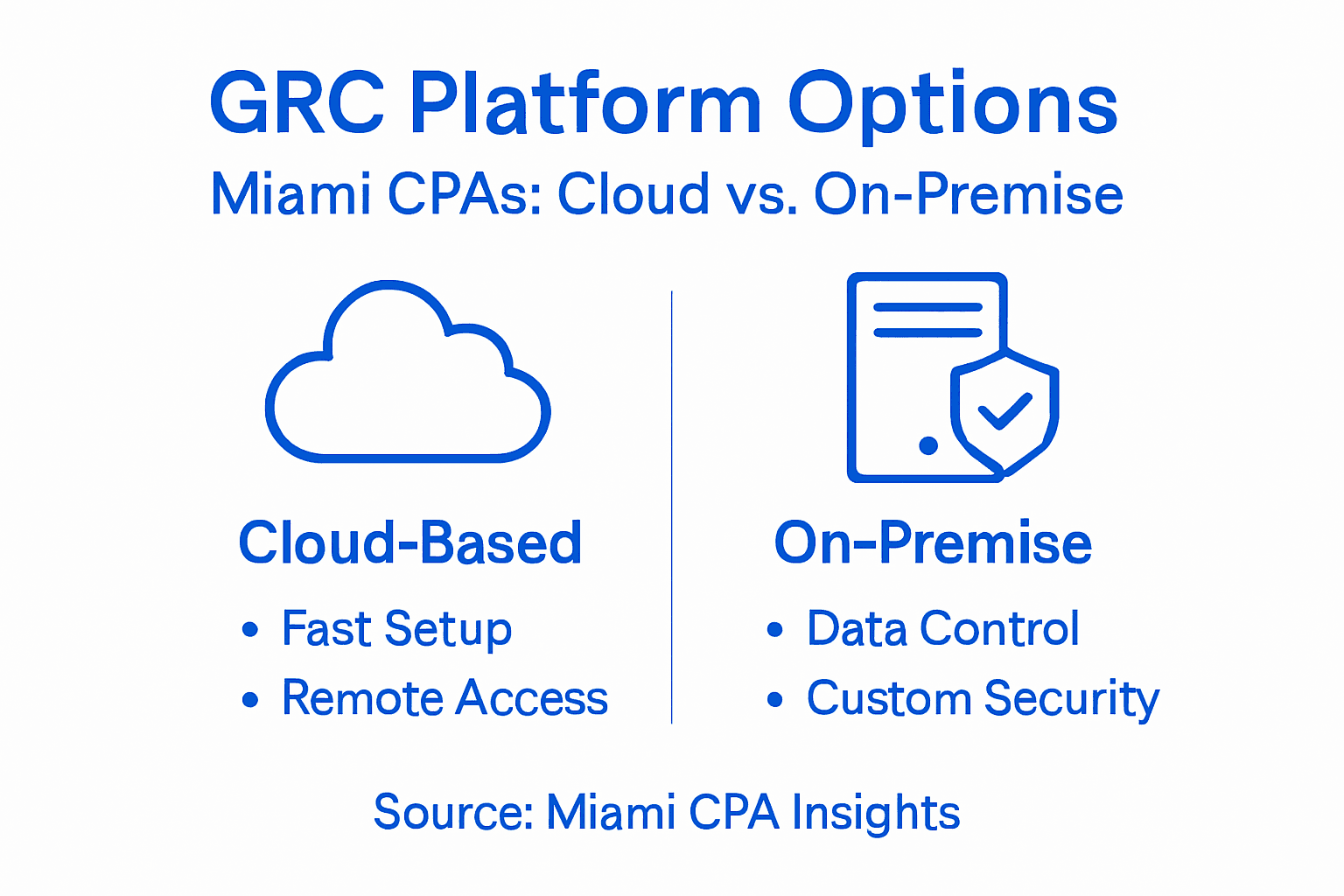
Here’s a comparison of common GRC platform deployment options for accounting firms:
| Deployment Model | Key Advantage | Main Limitation | Best For |
|---|---|---|---|
| Cloud-based | Scalability and remote access | Dependency on internet connectivity | Firms with distributed teams |
| On-premises | Customization and data control | Higher upfront cost | Firms handling sensitive data |
| Hybrid | Flexibility and balanced control | Increased integration complexity | Firms with diverse infrastructure |
Successful GRC platform selection goes beyond technical specifications. Miami CPAs must prioritize solutions that offer seamless integration with existing systems, robust reporting capabilities, and flexible risk assessment frameworks. The ideal platform should provide real-time monitoring, automated compliance tracking, and intuitive dashboards that enable proactive risk management while maintaining comprehensive documentation for regulatory review.
Pro tip: Conduct a comprehensive pilot test of potential GRC platforms using a small, representative subset of your firm’s operational processes to validate system compatibility and performance.
Elevate Your GRC Strategy and Accelerate Growth for Miami CPAs
Miami accounting firms face ongoing challenges transforming fragmented Governance, Risk, and Compliance efforts into a cohesive, agile system. If you struggle with integrating dynamic risk management, maintaining strict regulatory compliance, or leveraging GRC technology to grow your client base, you are not alone. This article highlights the critical importance of proactive GRC frameworks that adapt to Florida’s complex legal environment and the pitfalls of siloed approaches.
Do not let compliance complexities and risk gaps hold your firm back. Build the capabilities your clients expect and position your practice as a trusted, forward-thinking partner. Explore proven strategies and innovative technologies tailored specifically for Miami CPAs in our Grc Archives – Strategic IT Consultants For Accountants and discover how to harness integrated systems to reclaim your time and scale efficiently.
Take control of your firm’s future today. Visit Transform42 to unlock technology solutions designed to streamline your governance, risk management, and compliance processes. Land bigger clients, reduce operational complexity, and elevate your Miami CPA practice. Start now and turn your GRC challenges into your greatest growth advantage.
Frequently Asked Questions
What is a GRC strategy, and why is it essential for accounting firms?
A GRC strategy integrates governance, risk management, and compliance processes to ensure that accounting firms align with regulatory standards while effectively managing risks. This approach builds client trust and promotes sustainable growth.
How can accounting firms implement an effective GRC framework?
To implement an effective GRC framework, firms should develop dynamic systems that adapt to changing regulatory landscapes, invest in technological solutions, and foster a proactive organizational culture that prioritizes risk awareness and compliance.
What role does GRC technology play in client growth?
GRC technology automates compliance tracking and risk assessment, allowing accounting firms to provide clients with transparent insights into their financial risk management. This positions the firm as a forward-thinking partner and helps attract high-value clients seeking innovative solutions.
What are common mistakes in GRC adoption that accounting firms should avoid?
A common mistake is treating compliance as a checklist rather than an integrated strategy. Firms should avoid fragmented approaches and instead focus on developing comprehensive, dynamic systems that incorporate continuous training and effective communication across departments.